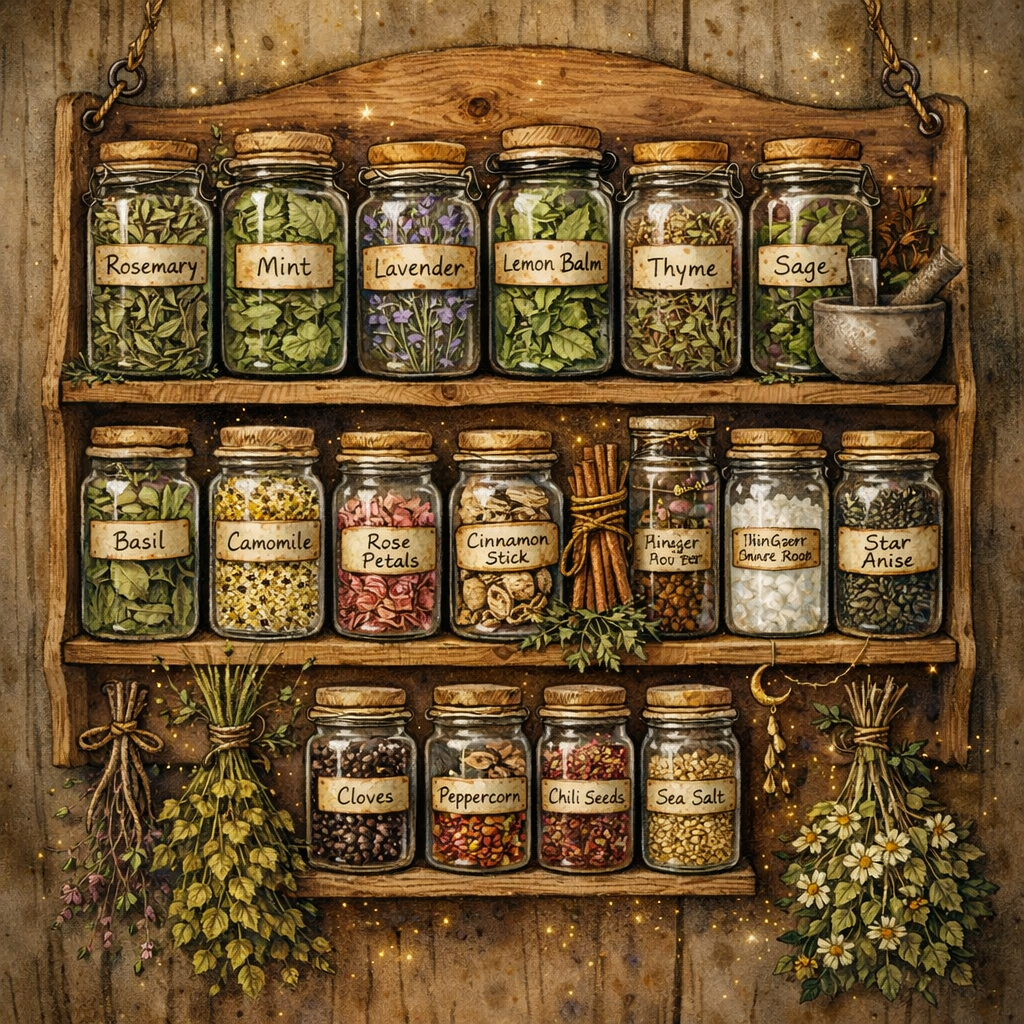
Learning Herbs & Flavours ✦
This page is for confidence more than perfection. If you have ever looked at a handful of herbs and thought what on earth do I do with these? — this is your gentle starting place.
Think of it as a small kitchen guide: what herbs and spices taste like, what they pair well with, and a few easy ways to begin using them without overthinking everything.
✧ A Few Familiar Herbs
Rosemary
Flavour: Strong, earthy, piney, slightly woody.
Works well with: Potatoes, roast vegetables, bread, lamb, chicken.
Easy start: Add just a little to roast potatoes or focaccia.
Thyme
Flavour: Warm, savoury, gentle, slightly peppery.
Works well with: Chicken, root vegetables, soups, beans, mushrooms.
Easy start: Add to soups, stews, or roasted onions and carrots.
Mint
Flavour: Fresh, cool, bright, sweet-sharp.
Works well with: Peas, potatoes, salads, yogurt, fruit, drinks.
Easy start: Stir into peas, steep in hot water, or add to fruit.
Sage
Flavour: Deep, savoury, earthy, slightly musky.
Works well with: Butter, onion, squash, stuffing, sausage, beans.
Easy start: Fry a few leaves gently in butter and spoon over pasta or vegetables.
Parsley
Flavour: Clean, green, fresh, light.
Works well with: Almost everything — potatoes, fish, eggs, butter, grains, salads.
Easy start: Chop over cooked potatoes or stir into butter.
Basil
Flavour: Sweet, soft, fragrant, slightly peppery.
Works well with: Tomatoes, mozzarella, pasta, olive oil, courgettes.
Easy start: Tear into tomato dishes or add to a simple salad.
✧ A Few Useful Spices
Cinnamon
Flavour: Warm, sweet, comforting, slightly woody.
Works well with: Apples, pears, baking, porridge, stewed fruit, hot drinks.
Easy start: Add a little to stewed apples, porridge, or a simple sponge.
Cloves
Flavour: Strong, deep, warm, slightly sweet and medicinal.
Works well with: Apples, oranges, spiced drinks, baking, preserves, simmer pots.
Easy start: Use just one or two in a simmer pot or fruit compote.
Nutmeg
Flavour: Warm, soft, nutty, gently sweet.
Works well with: White sauces, potatoes, baking, custard, creamy dishes.
Easy start: Add a tiny grating to mashed potato or a cheese sauce.
Ginger
Flavour: Warm, lively, slightly fiery, fresh or cosy depending on use.
Works well with: Biscuits, cakes, fruit, stir-fries, tea, carrots.
Easy start: Add ground ginger to biscuits or fresh ginger to tea.
Black Pepper
Flavour: Sharp, warming, earthy, gently spicy.
Works well with: Almost all savoury dishes, eggs, soups, vegetables, cheese.
Easy start: Use to lift soups, eggs, and buttery vegetables.
Star Anise
Flavour: Sweet, aromatic, liquorice-like, bold.
Works well with: Poached fruit, spiced drinks, syrups, simmer pots.
Easy start: Add one star to poached pears or a winter simmer pot.
✧ Simple Flavour Pairings
Earthy & Warm
Rosemary, thyme, sage
Lovely with potatoes, onions, squash, bread and roasting.
Fresh & Bright
Mint, parsley, basil
Lovely with salads, peas, yogurt, lemon, fruit and lighter meals.
Soft & Comforting
Thyme, parsley, butter, garlic
A good place to begin for soups, beans and vegetables.
Warm & Sweet
Cinnamon, nutmeg, clove, ginger
Lovely with apples, pears, baking, porridge and comforting drinks.
Deep & Spiced
Clove, star anise, cinnamon
Lovely in preserves, simmer pots, syrups and autumn or winter recipes.
Savoury Lift
Black pepper, nutmeg, thyme, sage
Lovely with cheese, potatoes, soups, sauces and roasted vegetables.
✧ Easy Ways to Begin
- Add chopped parsley or mint to cooked potatoes.
- Stir herbs into butter for bread, vegetables, or pasta.
- Add thyme or rosemary to roasting trays.
- Use mint in tea, fruit, or yogurt.
- Try one herb at a time so you can learn its flavour properly.
- If a herb is strong, use less than you think and build from there.