Whisper from the Workshop
The shape is already there. The work is simply to reveal it.
A slow and grounding craft of blade, grain, and patient hands — where a simple piece of wood is shaped into something useful, lasting, and quietly beautiful.
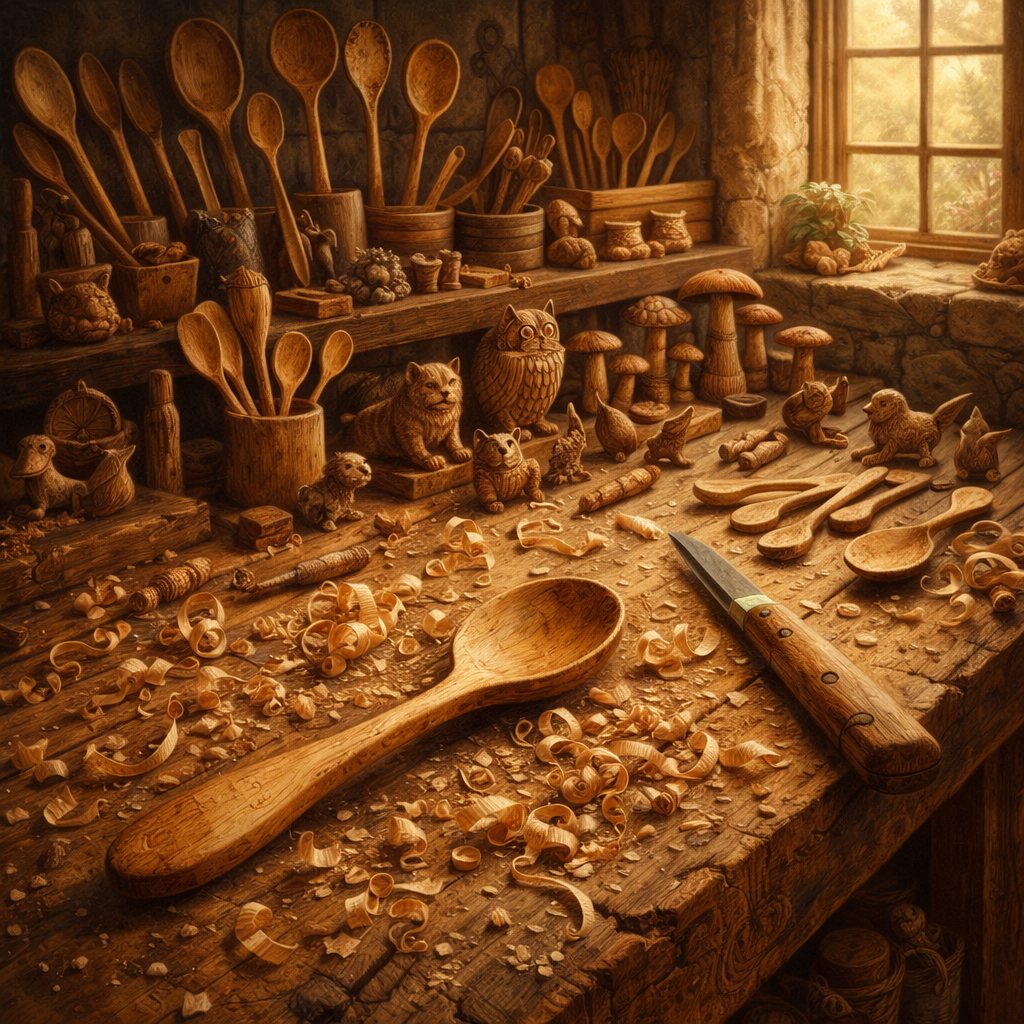
Wood carving and whittling are crafts of patience, touch, and close attention. A branch, billet, or small block of wood is held in the hand and slowly shaped, one shaving at a time, until form begins to appear.
There is something deeply satisfying in the process. The grain guides the blade, the hands learn the resistance of the wood, and what begins as something rough gradually reveals a softer, more useful shape. A wooden spoon is one of the oldest and simplest examples of this — humble, practical, and full of quiet character.
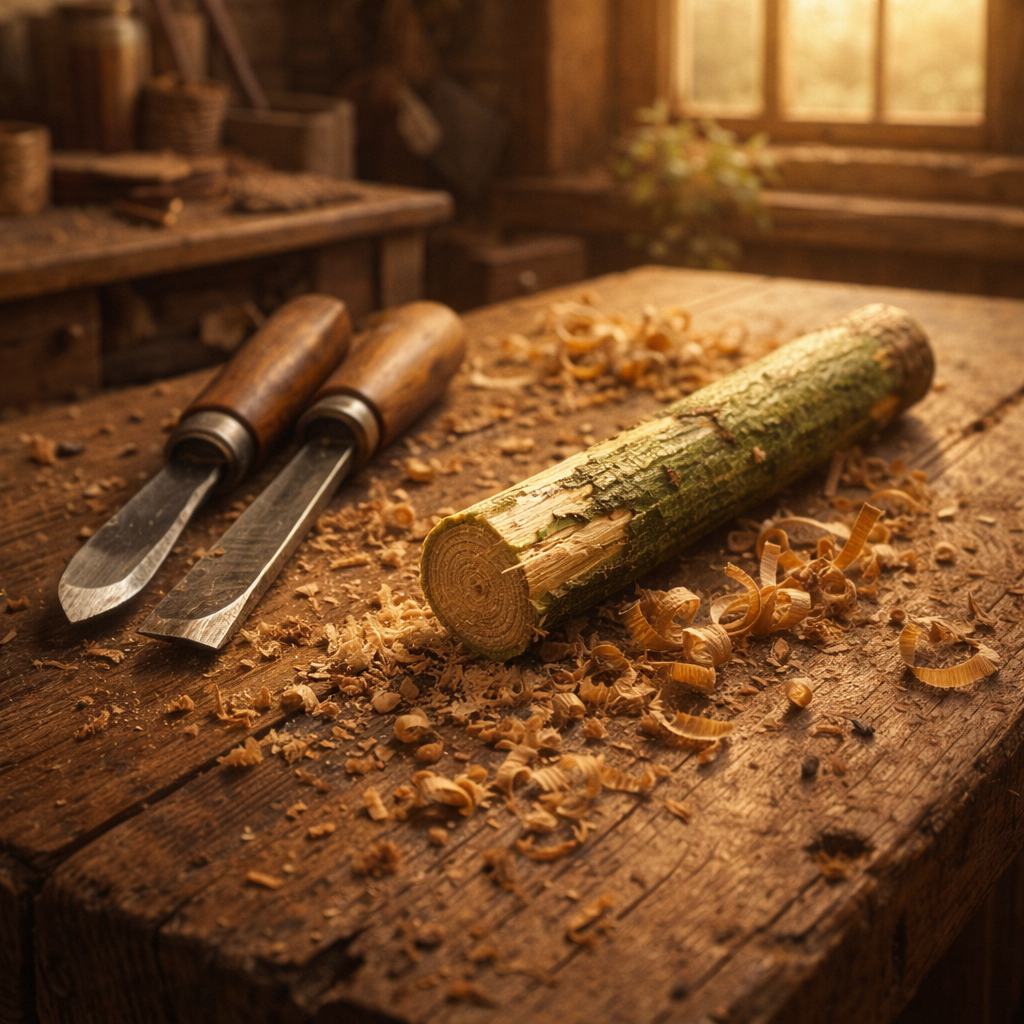
Every carved piece begins with the wood itself. Green wood is often easiest to work, with a fresh softness that allows the blade to move more willingly through the grain. The shape, knots, and natural curve of the piece all matter, hinting at what it may become.
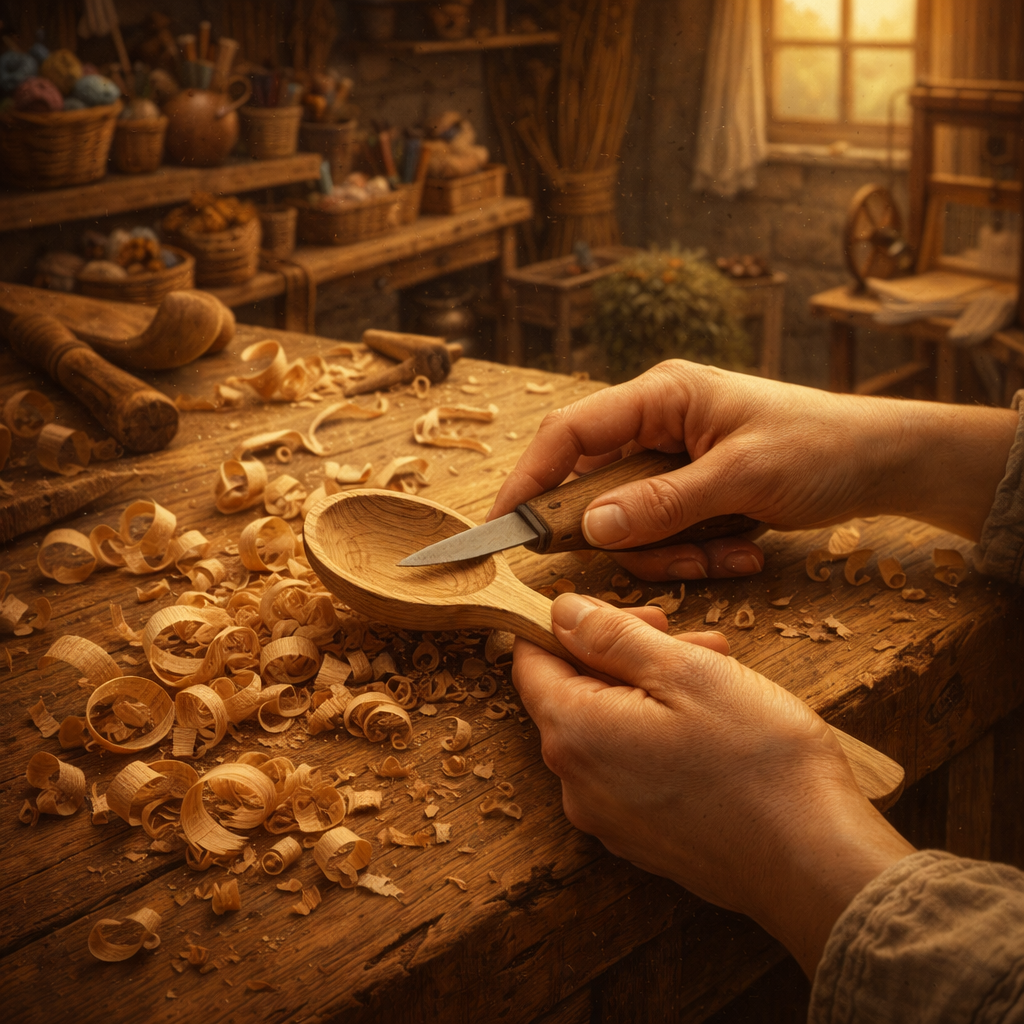
The first cuts establish the outline — handle, bowl, and overall balance. Here the spoon begins to emerge from the block, not all at once but in small careful decisions. Each shaving removed brings the final shape a little closer, revealing what was already resting quietly inside the wood.
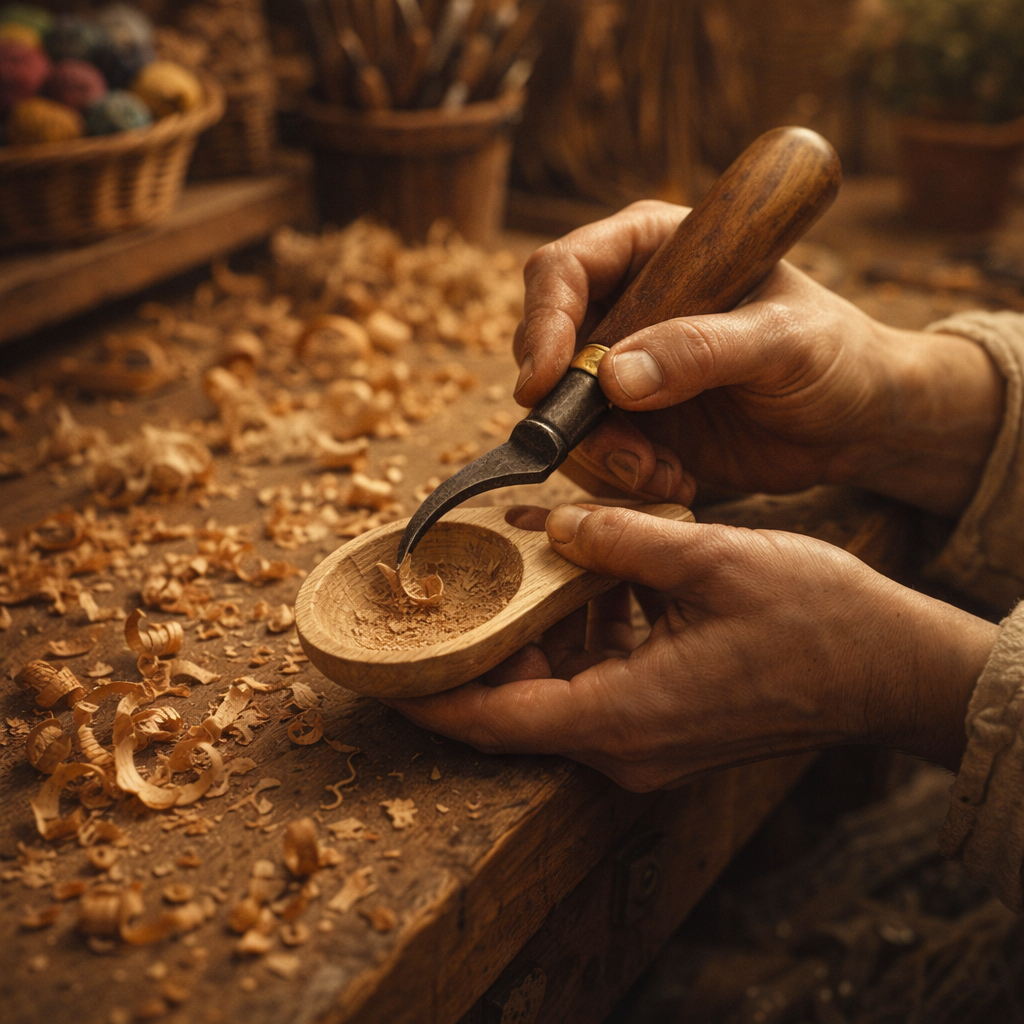
Hollowing the bowl is slower, more deliberate work. The curve must be shaped carefully, and the grain respected so the wood stays strong and smooth. This stage asks for patience, but it is often the most satisfying — the moment where the spoon truly becomes itself.
The shape is already there. The work is simply to reveal it.
As you begin carving, take a moment to hold the wood in both hands. Think of something you wish to shape with steadiness in your own life — patience, confidence, skill, or trust in your own pace.
Let each shaving be a small act of refinement, removing what is unnecessary and making space for what truly belongs.
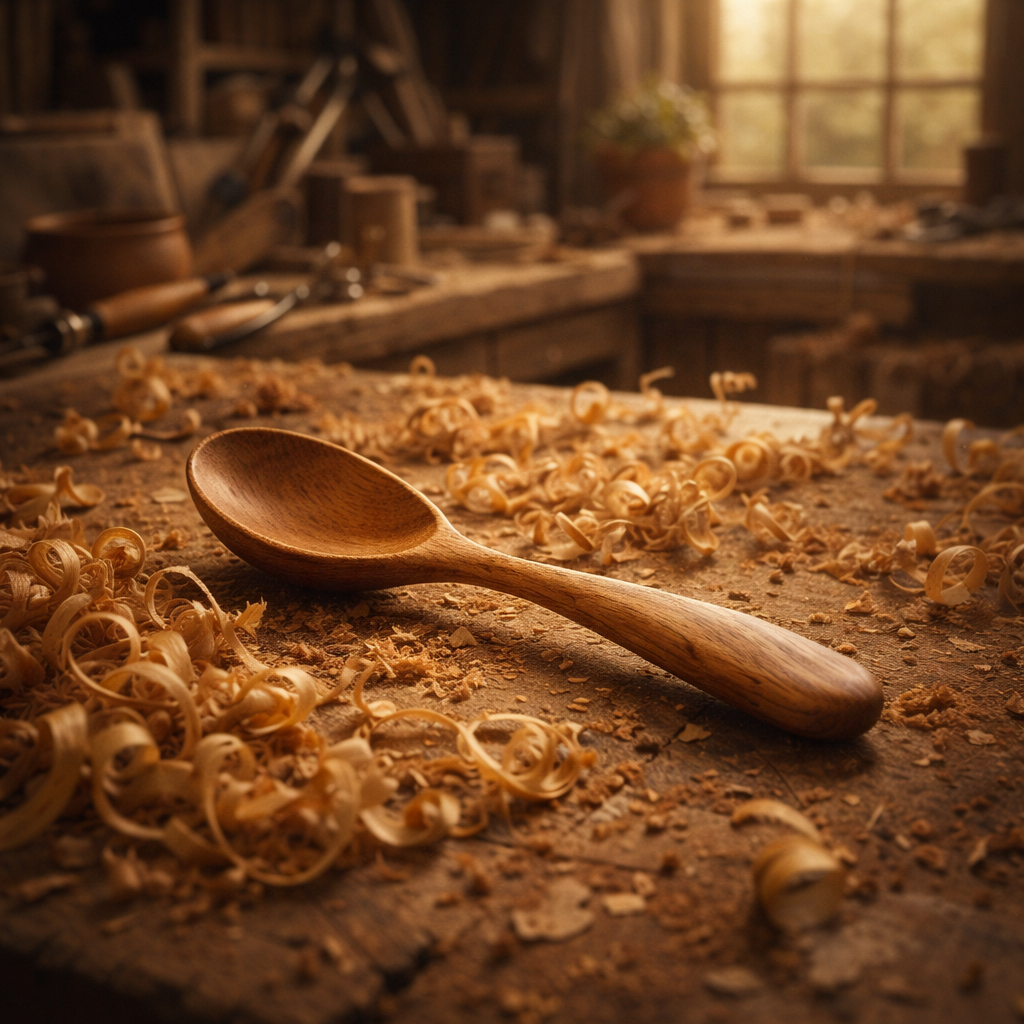
In the end, a wooden spoon is a simple thing — but it carries the whole story of its making in its grain, its curve, and the marks left by hand. It is useful, yes, but also quietly beautiful in the way all well-made objects are.
Shaped slowly. Made to last.