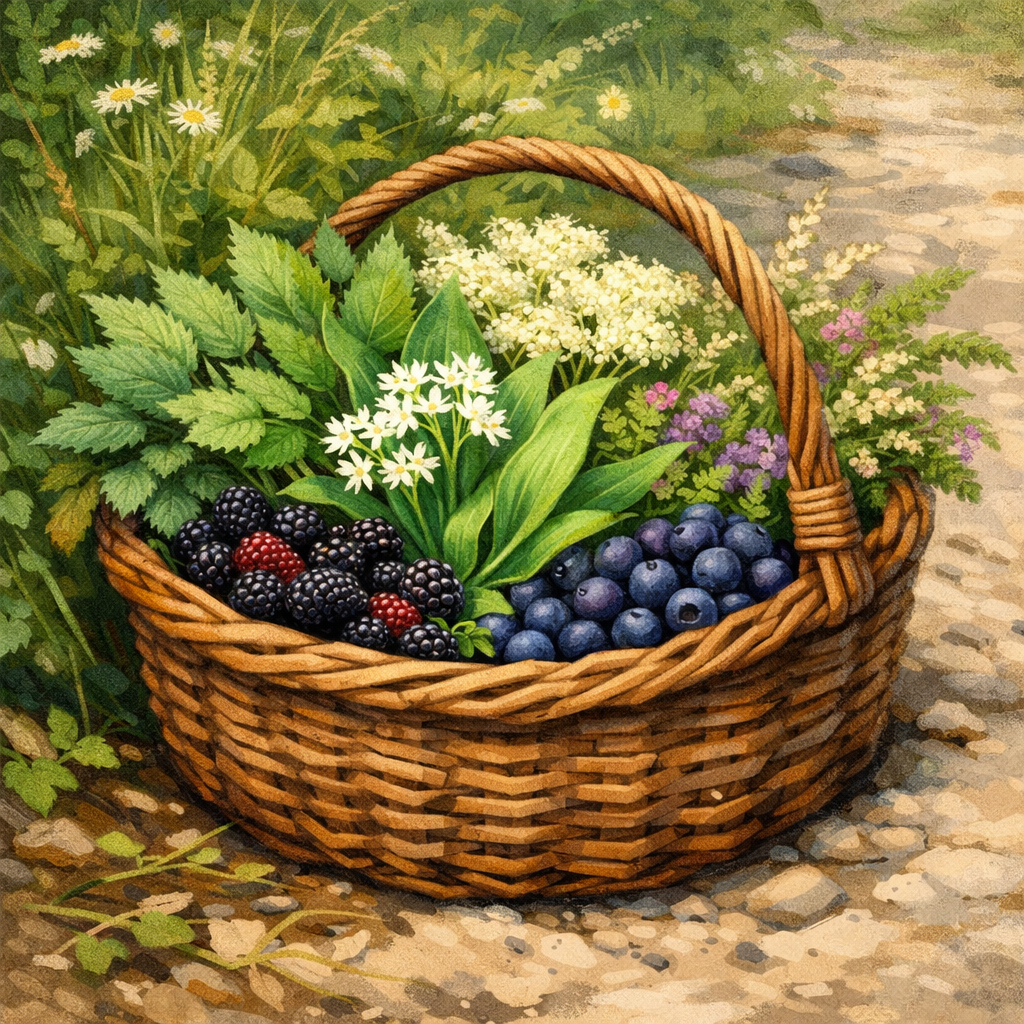
The meadow and hedgerow offer gifts in their own time — blossom, leaf, berry, and seed, if gathered with care.
Wild foraging is less about taking and more about noticing — learning what grows where, what returns each season, and what can be gathered lightly without harm.
Nothing should be taken in haste. Leave plenty behind. Gather only what you know, and let the meadow remain generous.
The wild edges of the meadow are full of small abundance for those who look carefully.
Spring foraging is tender and green — full of new leaves, sharp scents, and the first useful growth after winter.
Summer brings fragrance and softness — flowers for bottling, petals for sweetness, and the first berries worth waiting for.
Autumn foraging is fuller and slower — berries, fruit, and the kind of gathering that fills jars and cupboards for colder days.
The best foraged recipes are often the simplest — made to keep the flavour of the thing itself.
Never gather what you cannot identify with confidence. Some plants that grow beautifully in the wild are not safe to eat or use.
Avoid roadsides, sprayed areas, and places where land may not be clean. Gather lightly, leave roots undisturbed where possible, and never strip an area bare.
The meadow does not offer its gifts all at once. It teaches patience, watching, and returning at the right time.
What is gathered kindly always seems to carry a different sort of nourishment.