Upcycled Planters
The kitchen garden does not ask for perfect pots or expensive containers. It asks for imagination, drainage, and a willingness to see usefulness in ordinary things.
The Reclaimed Garden
Some of the loveliest corners of a garden begin with what was already there: a bucket that no longer holds water, an old crate, a chipped basin, a boot too worn for walking.
Upcycled planters make a space feel personal. They say this garden was not bought whole — it was gathered, mended, imagined, and made.
What Can Become a Planter
More things can be repurposed than people first realise. If it can hold soil and let water escape, it may well have a second life in the garden.
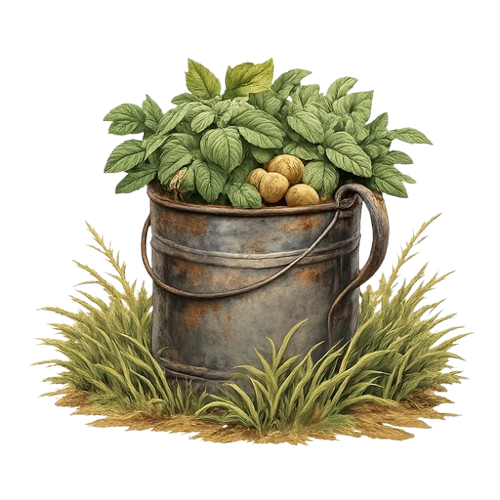
- Buckets — excellent for potatoes, carrots, or mixed planting.
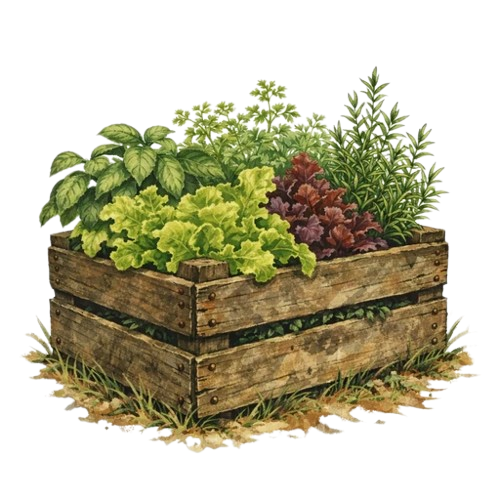
- Wooden crates — lovely for herbs, salads, and shallow-rooted crops.
- Old basins or bowls — good for trailing plants or simple floral displays.
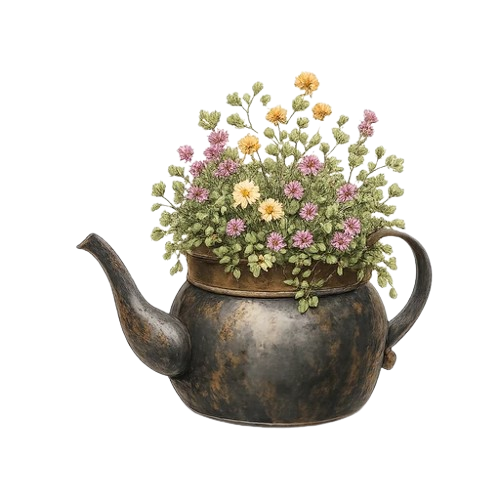
- Chipped mugs and teapots — perfect for tiny herbs or decorative corners.
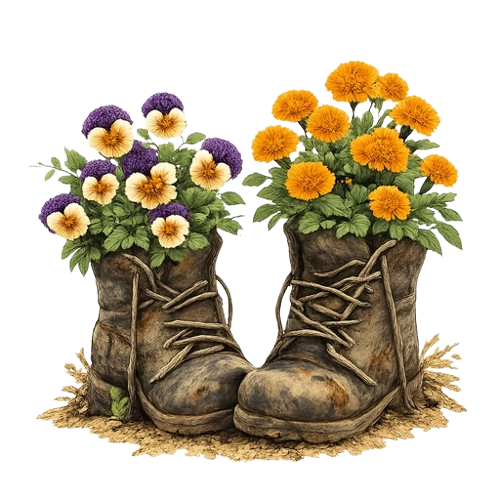
- Old boots or shoes — charming for flowers and small soft-rooted plants.
The One Rule: Drainage
The garden forgives many things, but stagnant water is rarely one of them. However lovely the container, roots will struggle if water cannot escape.
- Drill or punch drainage holes into the base wherever possible.
- Add a tray only if needed, and empty standing water when you can.
- If a container is very shallow, use it for herbs, salad leaves, or flowers rather than large vegetables.
- Check wooden containers over time, as constant damp will shorten their life.
Matching the Container to the Plant
A good upcycled planter is not only charming — it is suited to what is growing in it. Think of the plant’s roots, thirst, and final size before assigning it a home.
- Use deeper containers for potatoes, beans, tomatoes, and carrots.
- Shallower crates are lovely for mixed salad leaves and cut-and-come-again greens.
- Tiny pots and mugs suit thyme, chives, or decorative little corners.
- Mint still deserves its own space, even when that space is whimsical.
Making It Beautiful Without Fuss
Upcycled planters are at their best when they feel gently gathered rather than overly styled. A little moss on wood, a weathered handle, or a faded enamel edge can be part of the charm.
You do not need to make everything match. Repetition of colour, shape, or material will naturally tie things together over time.
Useful Things to Repurpose
Once you begin looking, the whole house and shed starts quietly offering possibilities. Keep only what you will truly use, but do let yourself notice what can be reclaimed.
- Storage tubs for larger crops.
- Tins for tools, seed packets, or labels.
- Broken handles or old spoons as plant markers.
- Wire baskets lined and planted for herbs or trailing flowers.
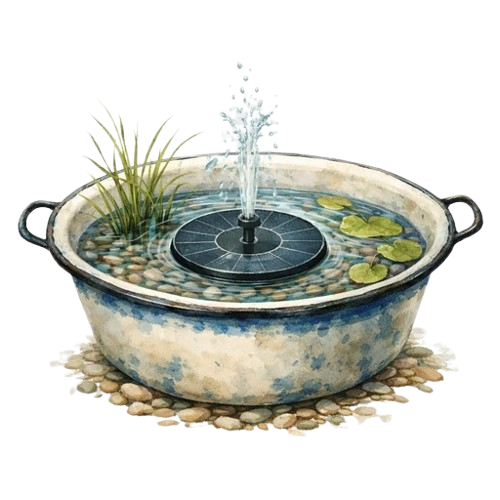
- Old basins and enamel bowls can become tiny water features, bringing movement, reflected light, and birds into even the smallest corner.
A Gentle Permaculture Thread
This way of gardening already leans toward a permaculture spirit: using what is at hand, reducing waste, and working with the shape of your real space rather than wishing for another one.
A reclaimed planter is not merely thrifty. It is a small act of noticing value where others might have seen an ending.
Small Water Features and Quiet Corners
Not every reclaimed vessel needs to hold compost. Some are better suited to water: an old basin, a shallow enamel bowl, or a sturdy tub can become a tiny reflective pool or solar water feature.
Even a modest one changes the feeling of a space. It catches the light, softens a hard corner, and sometimes brings birds or insects to visit where they otherwise might not have lingered.
What to Watch For
Some upcycled pieces are better for short-term or decorative planting than long-term food growing. Use common sense, especially with anything painted, treated, rusting heavily, or made from unknown materials.
- Avoid anything that may leach harmful substances into edible crops.
- Check for sharp edges before placing pots where hands will reach often.
- Lift larger containers carefully once filled — soil is heavier than it looks.
- Let practicality have a say alongside beauty.
A Little Guide to Upcycled Planters
A few simple pairings to help you choose what to grow where — small ideas to begin with, and expand over time.
Buckets
Best for: Potatoes, carrots, beans
Deep, generous, and quietly dependable.
Wooden Crates
Best for: Salad leaves, herbs
Perfect for easy picking and small daily harvests.
Tins & Small Pots
Best for: Thyme, chives, small herbs
Little corners of usefulness.
Hanging Planters
Best for: Strawberries, trailing herbs
Soft movement and gentle overflow.
Old Boots
Best for: Flowers, shallow-rooted plants
Unexpected, playful, and full of character.
Basins & Bowls
Best for: Water features, moss, tiny displays
Stillness, reflection, and quiet corners.
A Blessing for Useful Things
Before filling a reclaimed pot, pause and say:
“What was cast aside, be useful again.
What was empty, be made generous.”