Start Here
For small gardens, pots, windowsills, buckets, and people who are learning by doing. Nothing here requires perfection — only patience.
The Beginner’s Corner
Start small. Smaller than you think. A single pot of herbs is already a garden.
This place is not about doing it “right”. It is about doing it often enough that the soil begins to recognise you.
Before You Plant Anything
Spend a week watching. Where does sun land? Where does wind lean? Where does water pool? The garden tells you what it can hold — if you listen first.
- Pick the sunniest spot you have for tomatoes, strawberries, and herbs like rosemary.
- Give leafy greens (salad, kale) somewhere that gets light, but won’t scorch.
- If you only have shade, grow mint, lemon balm, parsley, and chives.
The Three Things That Matter
Beginners are sold complicated systems. Ignore them. If you have these three, you can grow food:
- Light (even a windowsill counts).
- Soil (a decent compost, not old dust from a forgotten pot).
- Water (regular, not perfect).
Pots, Buckets, and Upcycled Magic
Anything can be a planter if it has drainage. Drill holes. Add stones at the bottom. Fill with compost. A broken mug becomes a herb home. A bucket becomes potatoes.
What I Grow First
Herbs are the spine of this garden — reliable, forgiving, and useful. Start with one or two and expand when you trust your hands.
If you want vegetables straight away, choose the forgiving ones: salad leaves, spring onions, runner beans in a pot with a cane, and potatoes in a bucket.
The Moon Rhythm (Simple Version)
The moon does not control the garden. It gives you a rhythm. If you forget everything else, remember this:
- New Moon: plan, sow leafy greens, begin again.
- Waxing: transplant, tend, feed, encourage growth.
- Full Moon: harvest herbs, make oils, dry bundles, give thanks.
- Waning: prune, weed, compost, prepare soil.
A Beginner’s Compost (Small & Simple)
Compost is a quiet agreement: nothing is wasted for long. For a small space, a lidded storage box makes a good beginning. Drill air holes, layer kitchen scraps with torn cardboard or dry leaves, and stir when you remember.
- Greens: veg scraps, tea leaves, coffee grounds (if you use them).
- Browns: cardboard, dry leaves, paper (not glossy).
- Avoid meat and dairy in a small bin.
What You May Wish to Gather
- One or two pots (or anything that can hold soil)
- A small bag of compost
- A watering can or jug
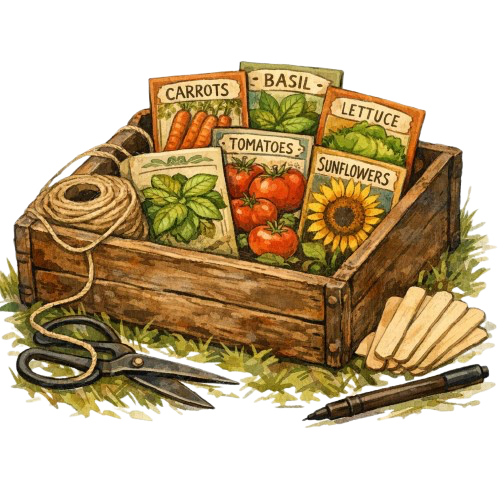
- A handful of seeds or one starter plant
This Season in the Garden
Begin gently. Sow a little. Watch often. Turn your pots toward the light, and notice what changes. Growth does not rush — it gathers.
A Few Gentle Things to Do
- Check the soil — water if it feels dry
- Turn pots so all sides meet the sun
- Remove anything faded or finished
- Pause and look — something will have changed
A Small Blessing for Seeds
Hold the packet or the seed in your palm. Breathe once. Then:
“Root deeply. Rise steadily.
Feed more than yourself.”