Connecting to nature does not have to be grand, expensive, wild, or perfect. It can be a hike
across open hills, a cold-water swim, a night beneath canvas, or a picnic in long grass. It can
also be five minutes at the back door, watching clouds move, listening to rain, or noticing one
brave weed growing through a crack in the path.
The point is not to perform nature properly. The point is to remember your place within it.
Slow down. Look closely. Let the world be more than a background. Let it speak in weather,
birdsong, mud, moonlight, leaves, scent, and small ordinary miracles.

Stars, moonlight, and the old comfort of looking up.

Walks, wandering, and paths that do not need rushing.

Picnics, pauses, and eating outside with the wind for company.
Watching the sky
The sky is one of the easiest ways back into nature because it is always there, even from a
window. Cloud-watching, moon-watching, sunrise, sunset, storm-light, and stars all invite you
to lift your head and notice time moving in a wider way.
- Watch the clouds for five minutes without naming anything as useful.
- Notice the moon phase and how the evening light feels.
- Learn one constellation, then greet it when you see it.
- Sit outside at dusk and listen for the first night sounds.
Walks, rambles & hikes
Walking lets the body and landscape speak to each other. A short lane walk, a woodland loop,
a coastal path, or a proper hill hike can all become a way of clearing the mind and returning
to your own rhythm.
- Choose one “noticing walk” where the goal is simply to observe.
- Look for seasonal signs: buds, berries, fungi, birds, seed heads, frost.
- Take a small notebook or use photos as a nature journal.
- Let some walks be slow enough for moss-level details.
Picnics & outdoor meals
Food outside has its own little spell. A flask of tea, a sandwich on a bench, soup by the sea,
or fruit under a tree can make an ordinary meal feel like a small celebration of being alive.
- Keep a simple picnic kit ready: blanket, flask, napkins, spoon, small bag.
- Try breakfast outside on a mild morning.
- Take tea to a favourite view.
- Leave no trace, and take every scrap home again.
Camping & sleeping close to the earth
Camping brings you into the pace of weather, light, temperature, and sound. Even one night
outside can remind you how much the body understands about darkness, morning, birdsong, and fire.
- Start simple: garden camping, a campsite, or a one-night trial.
- Notice how the world changes after sunset.
- Keep warm, safe, dry, and realistic — discomfort is not required.
- Wake early once and listen before the human noise begins.
Cold water & wild swimming
Cold water can feel cleansing, bracing, and wildly alive — but it asks for respect. The magic
is not in proving anything. It is in meeting water carefully, listening to your body, and staying safe.
- Go with experienced people or organised groups if you are new.
- Check access, tides, currents, water quality, weather, and exit points.
- Warm up gently afterwards with dry layers and a hot drink.
- A paddle, hand dip, or sitting beside water still counts.
Forest bathing
Forest bathing is not exercise and it is not a hike. It is slow presence among trees. You let
the woodland come to you through scent, sound, colour, texture, shade, and breath.
- Walk slowly and let yourself stop often.
- Notice five greens, four textures, three sounds, two scents, one breath.
- Place a hand near bark or moss without taking anything.
- Sit quietly long enough for the woodland to forget you are a visitor.
Meditating with the living world
Nature meditation does not need perfect silence. Birds, wind, traffic in the distance, dogs,
rain, people, and rustling leaves can all become part of the practice. Instead of trying to
empty the mind, let your attention rest on something real: breath, bark, water, flame, cloud,
stone, leaf, or sky.
Try sitting with your feet on the ground and your eyes softly open. Notice what is moving and
what is still. Notice what changes without needing your permission. Let the world carry some
of the weight for a while.
A tiny grounding practice
Name one thing you can see, one thing you can hear, one thing you can feel, and one thing
you are grateful for. Then take one slower breath and say, quietly or silently:
“I am here. The earth is here. For this moment, that is enough.”

Canvas, lanterns, dusk, and waking with the birds.

Water as mirror, teacher, boundary, and brave beginning.
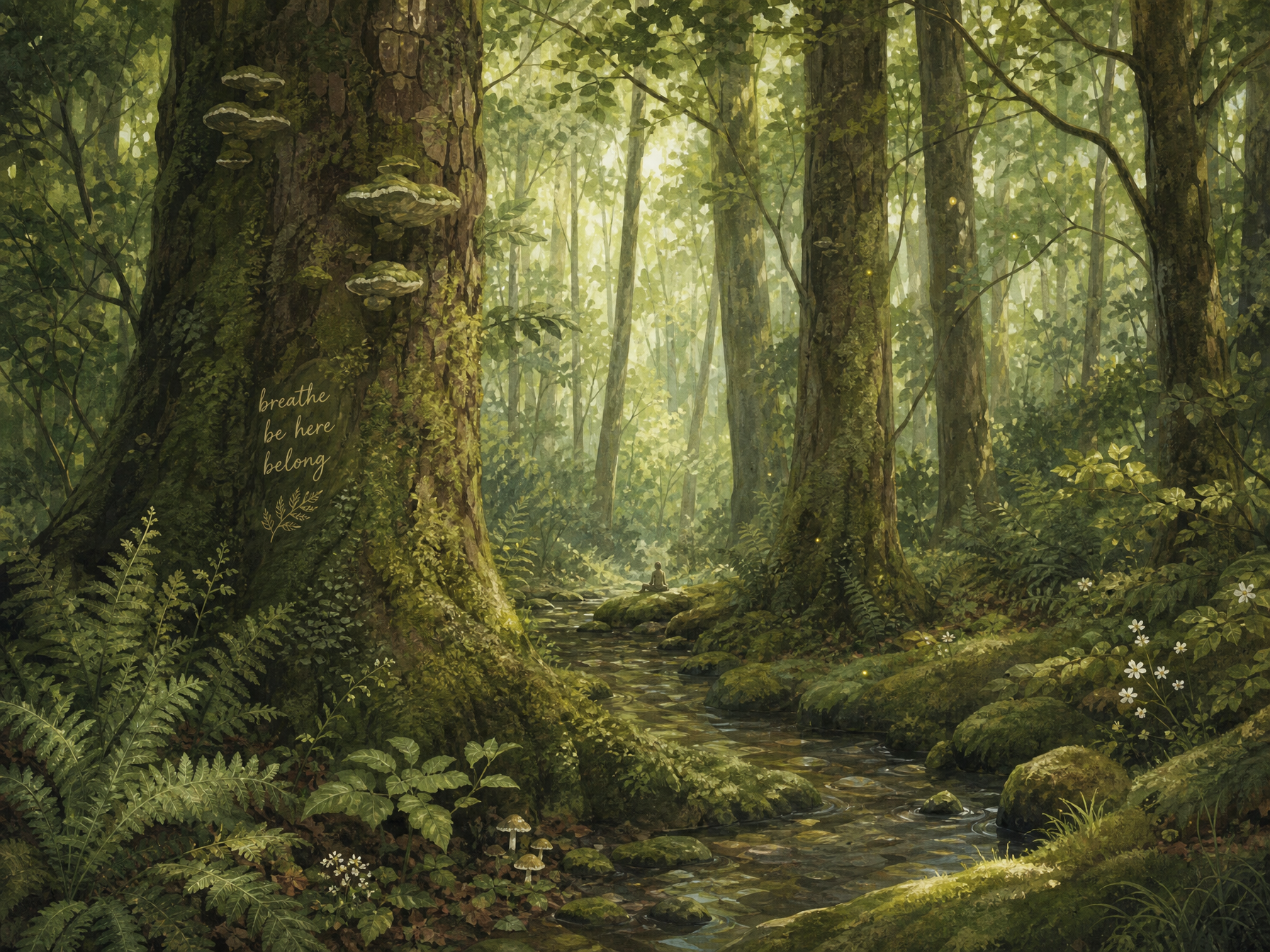
Forest bathing: slow enough for the trees to become company.
Bringing nature indoors
Some days you cannot get outside. Weather, pain, tiredness, anxiety, work, darkness, illness,
transport, or plain lack of energy can all make nature feel further away. On those days, bring
the living world to you in small, kind ways.
Window nature
- Watch clouds, rain, birds, moonlight, or moving branches.
- Keep binoculars by the window if you have a view.
- Notice one seasonal change each day.
- Open the window briefly and let real air in.
Indoor nature table
- Use shells, stones, feathers, seed heads, leaves, or pinecones.
- Keep it simple and change it with the seasons.
- Add a candle, postcard, nature book, or tiny vase.
- Only gather respectfully and legally, and avoid protected places.
Scent, sound & texture
- Use dried herbs, wooden objects, beeswax, wool, linen, or clay.
- Play rain, woodland, stream, or birdsong sounds softly.
- Hold a smooth stone during anxious moments.
- Keep a “comfort leaf” drawing or pressed flower in a journal.
Growing indoors
- Try herbs on a windowsill, spider plants, ferns, or easy houseplants.
- Grow cress, pea shoots, or microgreens for quick green hope.
- Keep a small watering ritual as a weekly pause.
- Let imperfect plants count. Nature is not tidy either.
Nature indoors does not have to become another job. One plant, one stone, one open window,
one nature book, one bowl of acorns, one recording of rain — that is enough. Connection is
not measured by how far you travel. It is measured by attention.
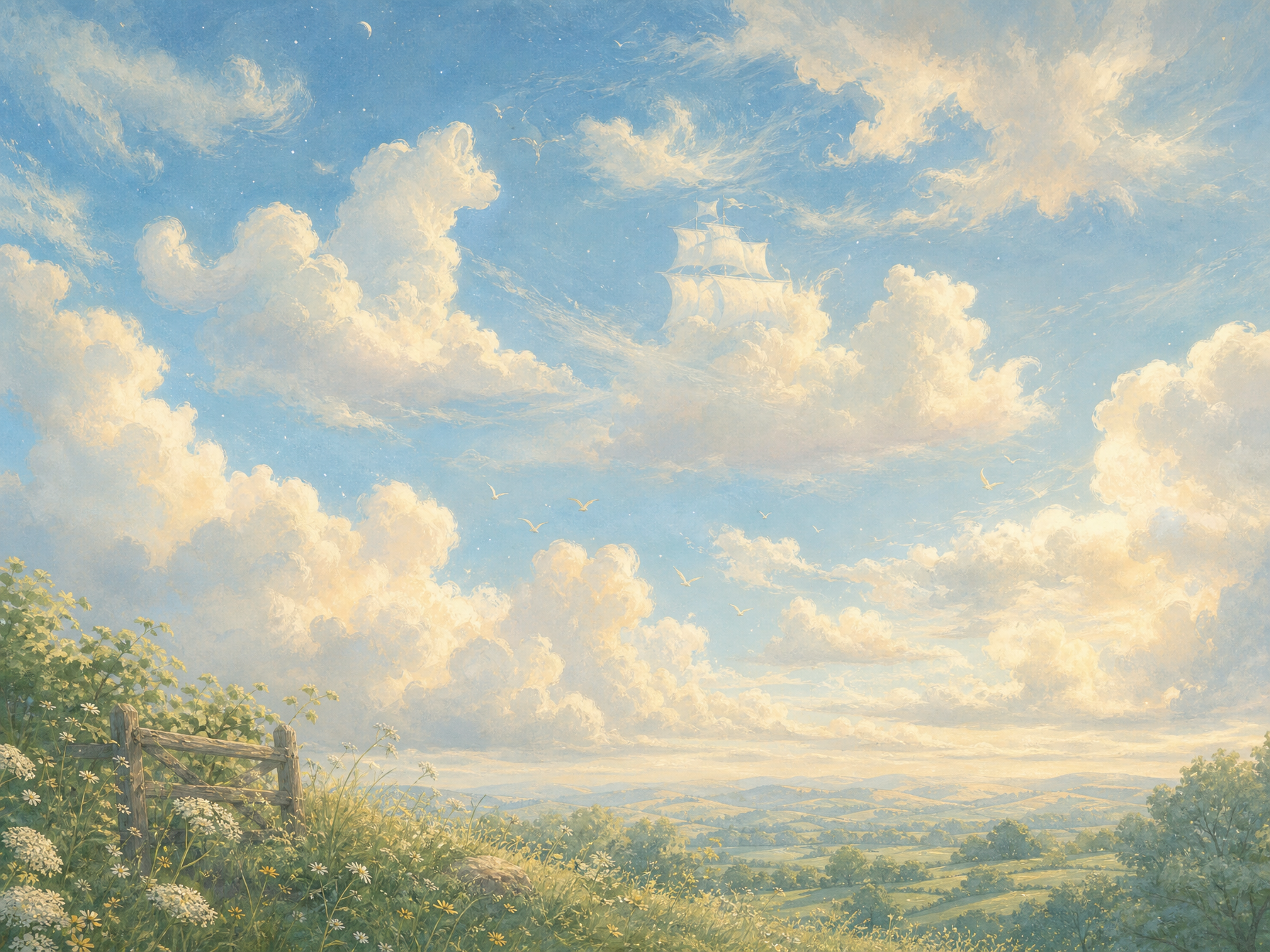
Clouds are a free, changing sky-book.

Nature indoors for rainy days, tired days, and winter evenings.

Morning light, birdsong, and a small garden moment.
Small ways back
When you do not know where to begin, choose something tiny. Nature connection does not need
a plan, a perfect outfit, a long drive, or a dramatic transformation. It begins with noticing.
- Stand barefoot on grass for one minute.
- Drink your morning tea by an open window.
- Learn the name of one tree, bird, flower, cloud type, or star.
- Take the same walk each month and notice what has changed.
- Watch a bee without rushing it.
- Put your hand on a tree and breathe before you move on.
- Sit outside wrapped in a blanket and let the evening happen around you.
- Keep a nature journal with words, sketches, pressed leaves, or simple lists.
- Make a “weather note” each day: sky, wind, mood, moon, season.
- Pick up litter when you can, as a small act of thanks.
Garden moments
You do not need to travel far to feel close to nature. A cup of tea on a patio,
a chair beside a few pots, a robin on the fence, or ten quiet minutes in morning
light can be enough to bring you back to yourself. Small gardens, courtyards,
balconies, doorsteps, and windowsills can all become places of connection when
you meet them with attention.
- Take your first drink of the day outside when the weather allows.
- Notice one bird, one plant, one sound, and one change in the light.
- Keep a small chair, cushion, or blanket ready for quick garden pauses.
- Let a tiny outdoor ritual count, even if it only lasts five minutes.
“You do not have to escape your life to meet nature. Sometimes you only have to step outside and pay attention.”